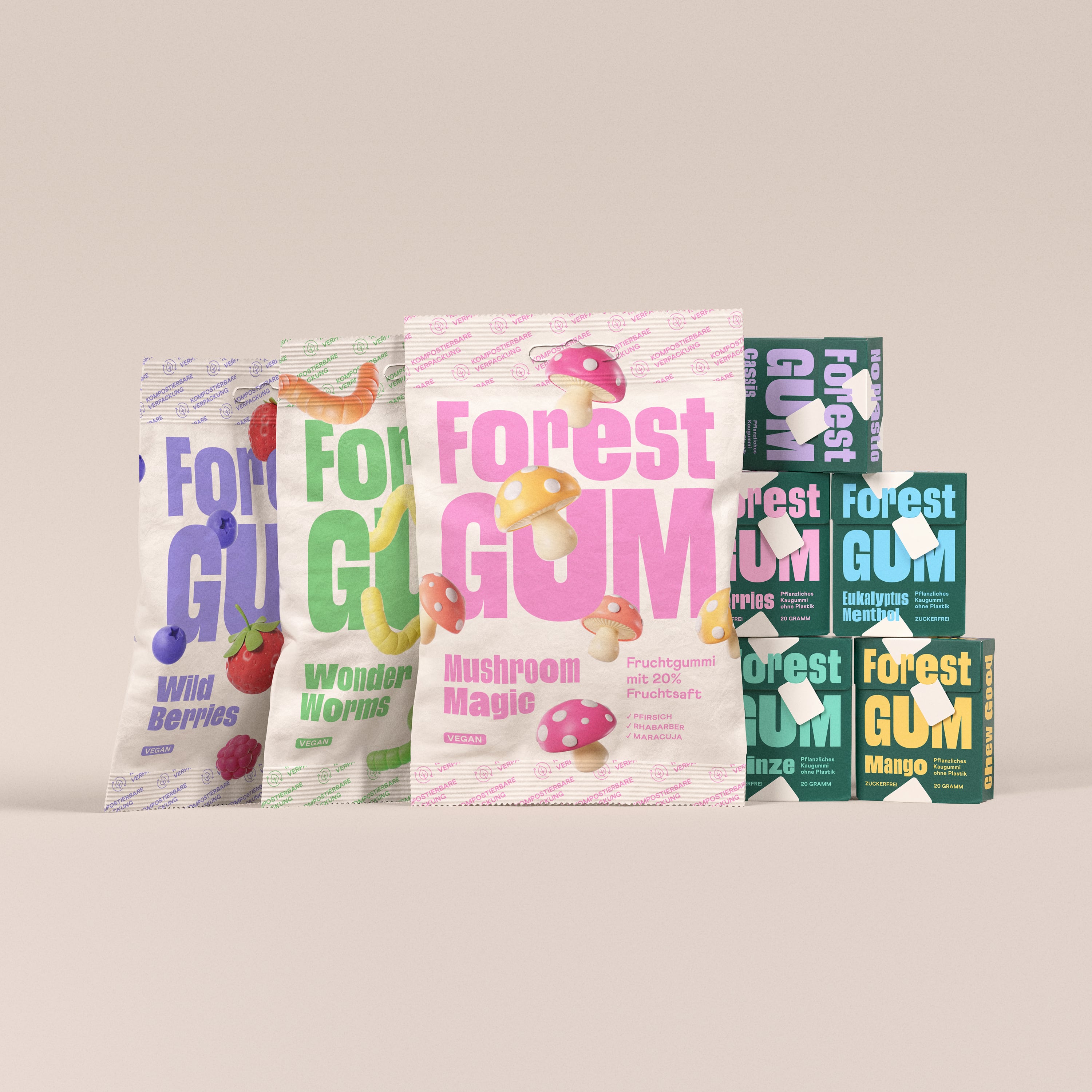
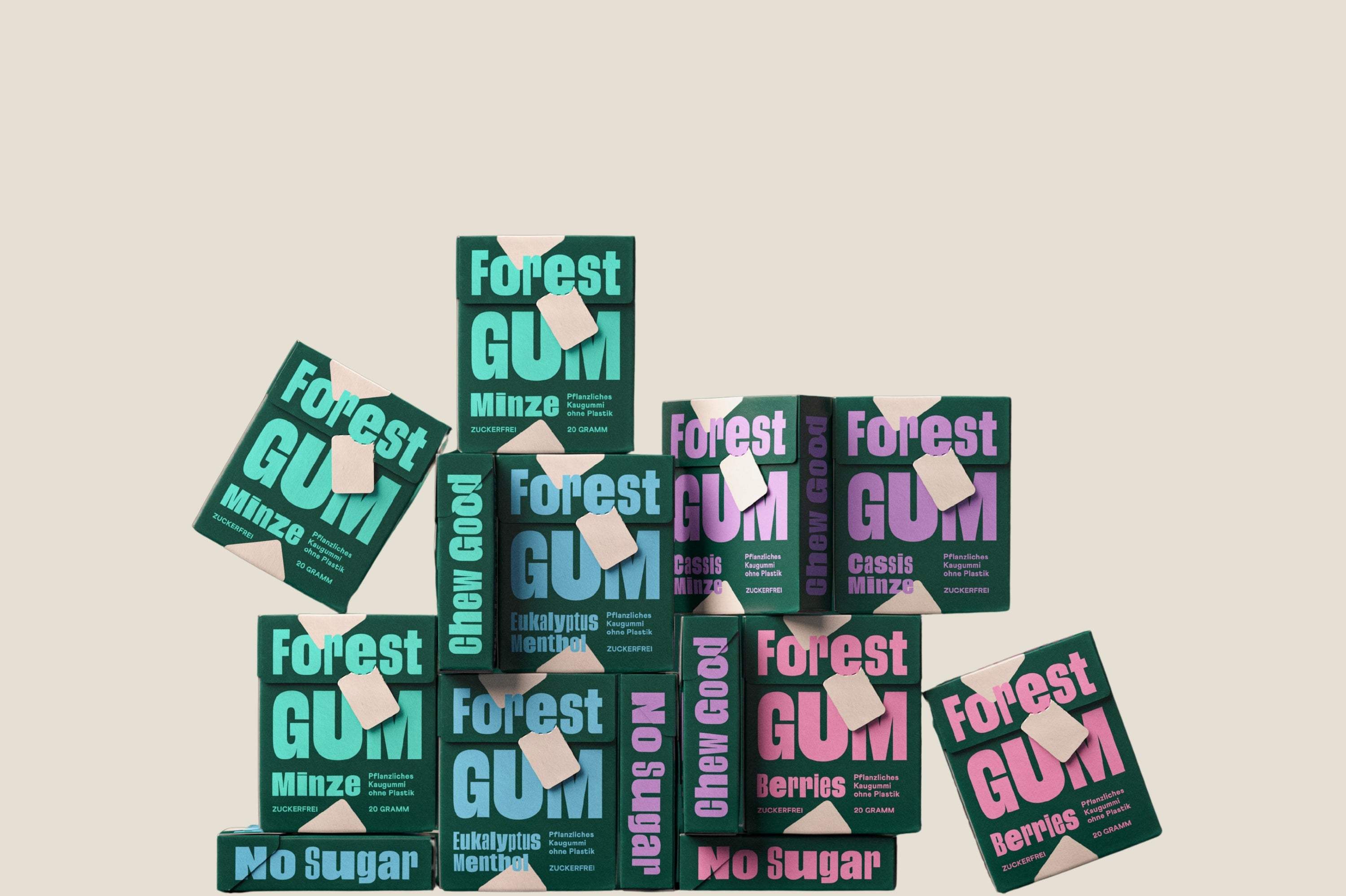


The chewing gum you spat out still exists – for years now.
Imagine that every piece of chewing gum you have ever spat out was still somewhere in the world. On a sidewalk. In a parking garage. In the soil of a park. It sounds like a metaphor – but it is literally true. Conventional chewing gum hardly decomposes. Instead, it breaks down into microplastics over many years.

The global pla![]() stic crisis no longer needs a scapegoat
Today, over 460 million tons of plastic are produced worldwide every year. The OECD warns: by 2040, 119 million tons of plastic waste could enter the environment uncontrolled annually. With devastating consequences for ecosystems, drinking water, and human health.
Chewing gum is hardly a topic in this discussion. Yet, it is one of the few plastic products that we literally put in our mouths and then leave on the ground. That grey lump on the paving stone? Plastic. The dark pattern of spots in every pedestrian zone? Chewing gum microplastics in waiting.
What happens after you spit it out?
Conventional chewing gum contains synthetic polymers. These are neither broken down by microorganisms nor dissolved by rainwater. Over the years, they mechanically crumble into smaller and smaller particles – until they seep into the soil, enter the sewage system, and finally end up in waterways. From there, they make their way back into our bodies via the food chain.
Small, but systemically relevant
Of course, a piece of chewing gum is not an industrial accident. But it is part of a system that we support or change with small, daily decisions. Anyone who switches to plastic-free chewing gum – one without plastic in the gum base – breaks this cycle.
Sources: Our World in Data – Plastic Pollution; OECD (2024) – Development Co-operation and the Elimination of Plastic Pollution